Enterprise design system at scale
1,000+ sites unified • 60% faster builds • WCAG 2.1 AA by default

1,000+ sites unified • 60% faster builds • WCAG 2.1 AA by default
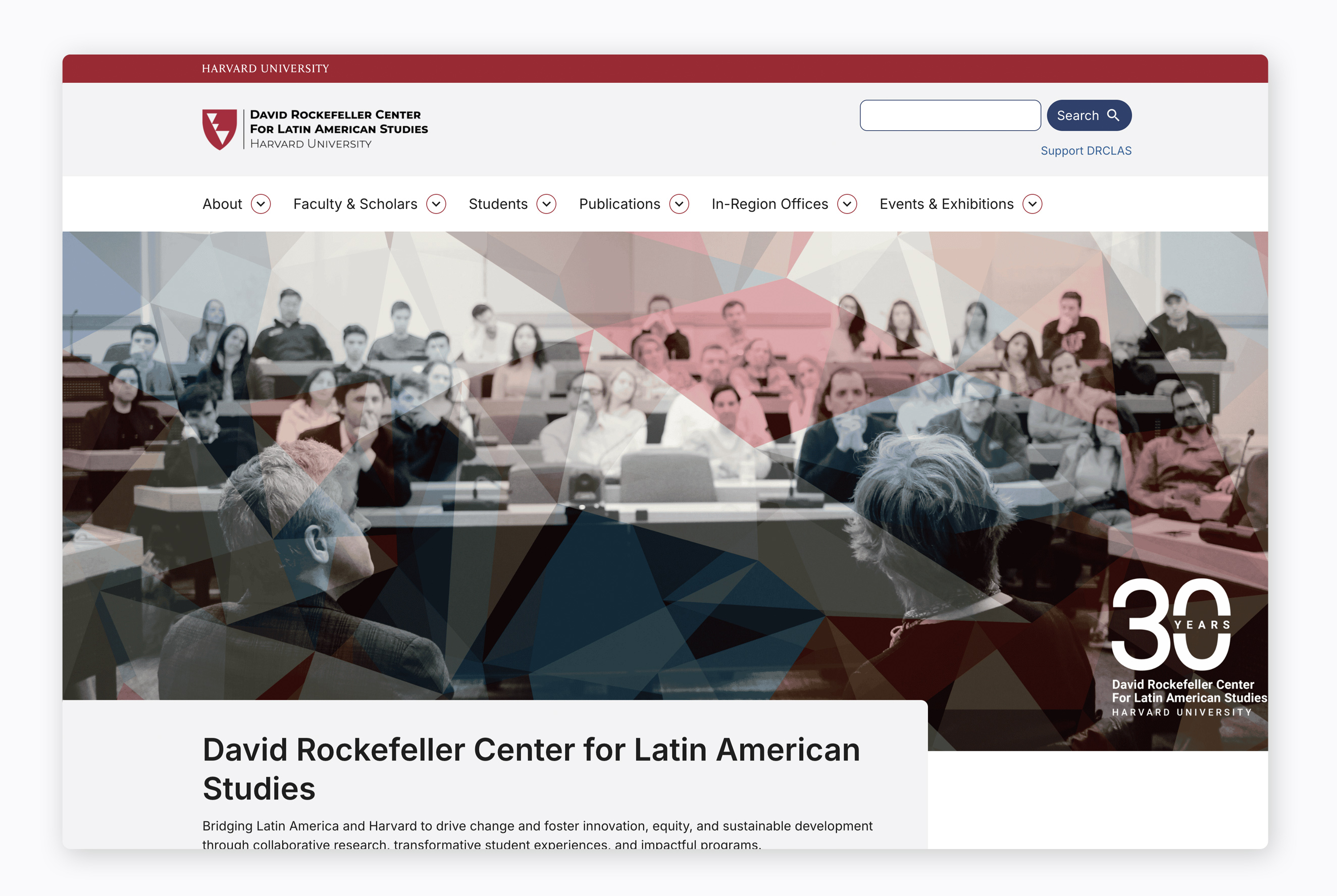
Led the evolution of a university-wide design system supporting more than 1,000 academic and administrative websites.
The work aligned UX standards, accessibility, and implementation across distributed teams, reducing build time by 60% and improving consistency at scale.
Harvard’s web ecosystem spans schools, departments, and programs with independent publishing teams and varying levels of design and accessibility maturity.
Without shared system structure, teams repeated the same decisions, rebuilt similar patterns, and shipped inconsistent experiences across sites.
Scaling consistency across 1,000+ sites required more than a component library. It required shared semantics, accessibility baked into the system, and standards that could work across distributed teams and workflows.
Fragmentation was not only a design problem. It was a systems problem.
The work focused on establishing a scalable foundation that teams could adopt, extend, and maintain over time.
Deeper system layers are documented in the related case studies below.
Unified 1,000+ sites under shared system standards Reduced build time by 60% Embedded accessibility standards by default Improved consistency across distributed teams
Golden-ratio type scale and governed semantic token structure designed for consistency and accessibility.
Core tokens, semantic mapping, and controlled overrides to support multiple brands without fragmentation.
Contribution model, workflow alignment, and shared standards to support cross-team adoption and long-term sustainability.
If your organization is navigating platform complexity, I can help bring clarity to systems, standards, and accessibility.